Colorball Brush: A Practical Evaluation for Digital Artists
In the expansive ecosystem of digital art tools, specialized brushes serve as critical extensions of an artist’s intent. The Colorball Brush represents a niche but potentially valuable asset for creators working in raster-based software such as Adobe Photoshop, Procreate, or Clip Studio Paint. Unlike standard round or flat brushes, this tool is designed to introduce specific textural and chromatic behaviors into the workflow. Understanding its utility requires moving beyond simple feature lists and examining how it integrates into broader artistic processes, from concept sketching to final rendering.
Understanding the Colorball Brush Functionality
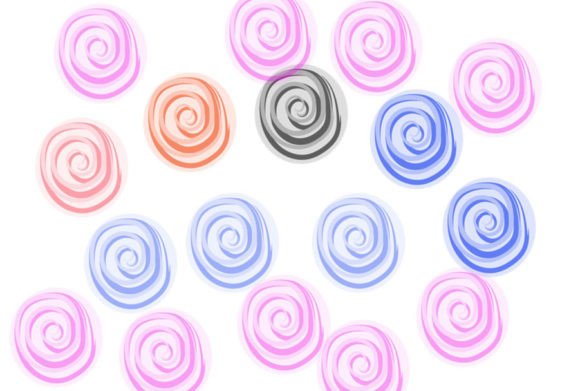
At its core, the Colorball Brush is a digital preset configured to simulate a distinct application of pigment. While exact behaviors can vary depending on the creator’s configuration, brushes in this category typically focus on soft, blended edges with a degree of randomness in opacity or flow. This creates a "ball-like" dispersion of color that mimics traditional media such as airbrushing, soft pastels, or watercolor blooms. The primary technical characteristic is its ability to lay down color in a way that feels organic rather than mechanically uniform.
When evaluating this tool, it is essential to recognize that it is not a standalone solution but a component of a larger toolkit. The inclusion of a single brush file—whether in .brushes or .swatches format—means that its value is derived entirely from how well it complements existing workflows. For artists accustomed to building custom brush libraries, adding a specialized tool like the Colorball Brush can fill gaps in texture variety or blending capabilities.
Key Benefits and Artistic Applications
The decision to incorporate the Colorball Brush into a project usually stems from a need for efficiency in specific areas of image creation. One of the most significant advantages is its potential for rapid background generation. Because the brush likely offers soft transitions and varied density, it allows artists to block in atmospheric perspectives, sky gradients, or abstract backgrounds without the tedious manual blending required by hard-edged tools.
Furthermore, this brush type is often effective for adding depth and volume to subjects. By using low-opacity strokes, artists can build up form gradually, creating smooth shadows and highlights that avoid the "plastic" look sometimes associated with digital painting. This makes it a strong candidate for character design, particularly when rendering skin tones, fabric folds, or organic materials where harsh lines are undesirable.
- Enhanced Blending: Facilitates smoother transitions between colors, reducing the need for separate smudge tools.
- Textural Variety: Introduces organic irregularities that break up the uniformity of digital pixels.
- Workflow Speed: Allows for quicker coverage of large areas with nuanced tonal variation.
Considerations and Potential Tradeoffs
While the benefits are clear, prospective users must weigh certain tradeoffs. A single-brush package, such as the one described in the download contents, offers limited versatility on its own. Artists who rely on a diverse array of textures may find that one specialized brush does not justify the cost or download effort unless it perfectly addresses a specific recurring problem in their work.
Another consideration is software compatibility. Digital brushes are rarely universal. A .brushes file might work seamlessly in Photoshop but require conversion or may not function at all in Procreate or Krita. Users must verify that the file format aligns with their primary software before committing to the tool. Additionally, the performance of such brushes can depend on hardware; tablets with lower pressure sensitivity levels may not fully capture the nuanced opacity variations intended by the brush designer.
There is also the learning curve associated with any new tool. Even a simple brush requires adjustment to pressure settings, spacing, and flow controls to achieve optimal results. Artists expecting immediate mastery without experimentation may be disappointed. The effectiveness of the Colorball Brush is heavily dependent on the user’s ability to manipulate tablet pressure and stroke direction.
Ideal Use Cases for the Colorball Brush
This tool is particularly well-suited for specific artistic scenarios. Concept artists working on environment designs may find it invaluable for quickly establishing mood and lighting conditions. The soft, diffused nature of the brush allows for rapid iteration of light sources and atmospheric effects, which are crucial in early-stage conceptualization.
Illustrators focusing on soft-style aesthetics, such as children’s book illustrations or dreamy portraits, will also find strong alignment with this tool. In these genres, hard edges are often minimized in favor of gentle transitions and whimsical textures. The Colorball Brush can help achieve this ethereal quality without requiring complex layer masking or filter applications.
Moreover, hobbyists and students looking to expand their digital toolkit without overwhelming complexity may appreciate the simplicity of a single, focused brush. It provides an opportunity to study how specific brush dynamics affect the final image, serving as an educational resource for understanding digital paint behavior.
When to Consider Alternatives
Despite its strengths, the Colorball Brush is not a universal solution. Artists working in technical fields, such as architectural visualization or hard-surface modeling, may find its soft edges counterproductive. These disciplines often require crisp lines and precise control, which are better served by hard-round brushes or vector-based tools.
Additionally, if an artist already possesses a comprehensive brush library with high-quality blending and texture options, the marginal gain from adding another similar brush may be negligible. In such cases, investing time in mastering existing tools or exploring more diverse texture packs might yield better returns. Users seeking extensive variety should look for larger bundles that include edge-defining, texturing, and detailing brushes alongside blending tools.
For those using open-source software like Krita or GIMP, compatibility issues may arise. If the provided files are proprietary formats exclusive to Adobe products, users of alternative platforms should seek native equivalents or community-created brushes designed specifically for their software ecosystem.
Making an Informed Decision
Evaluating the Colorball Brush requires a clear understanding of your current artistic needs. Ask yourself whether your current workflow lacks efficient blending tools or organic textural options. If you frequently struggle with creating smooth gradients or atmospheric backgrounds, this brush could offer a streamlined solution. However, if your work prioritizes precision, sharp details, or technical accuracy, this tool may play only a minor role, if any, in your process.
It is also wise to consider the source and support available. Since the package includes a single brush, check if the creator provides tutorials or demonstration files. Seeing the brush in action can clarify its potential and help determine if it matches your stylistic goals. Ultimately, the value of the Colorball Brush lies not in its isolation but in its integration. It is a specialized instrument that, when used correctly, can enhance the depth and realism of digital artwork, provided it aligns with the artist’s specific technical and aesthetic requirements.
In conclusion, the Colorball Brush is a focused tool for digital artists seeking to enhance their blending and texturing capabilities. Its utility is highest for those working in soft, atmospheric, or organic styles. By carefully considering software compatibility, existing toolkit redundancy, and personal artistic goals, creators can determine whether this addition will meaningfully improve their digital painting experience.